- HEALTHY GUT HEALTHY THYROID
- Posts
- Why Most Endocrinologists Ignore Your Gut Health
Why Most Endocrinologists Ignore Your Gut Health
Healthy Gut Healthy Thyroid Newsletter!

Dr. Eric Osansky
October 26, 2025

Welcome to Healthy Gut Healthy Thyroid!
This is your weekly roundup of the BEST actionable steps for those people with thyroid and autoimmune thyroid conditions who want to restore their health…by healing their gut. Whether you have hyperthyroidism or Hashimoto’s you will benefit from the content in this newsletter.
In today's issue:
Main Topic: Why Most Endocrinologists Ignore Your Gut Health
Podcast Review: The Hormone Shifts Every Woman Must Watch For
Ask Dr. Eric: Does gut health play a role in fertility?

Why Most Endocrinologists Ignore Your Gut Health
After reading my book "Hashimoto’s Triggers" Leslie asked her endocrinologist why she doesn't do anything to support the gut in her Hashimoto’s patients. Her endocrinologist responded "your gut health has absolutely nothing to do with your thyroid health".
Now this shouldn't be a surprise, as most medical doctors, including endocrinologists, don't do anything to improve the health of the gut and immune system in their patients with Graves' disease and Hashimoto's. They solely focus on managing the thyroid.
And it wouldn't make a difference if this person was experiencing gastrointestinal symptoms. Their approach still wouldn't change, other than perhaps referring the person back to their primary care doctor, who in turn might then refer the person to a gastroenterologist.
All Conventional Doctors Ignore The Immune System
Of course it's not just endocrinologists who ignore the autoimmune component. The reason I'm targeting endocrinologists here is because they're the one's who see people with Graves' disease and Hashimoto's.
But this is the case with pretty much all medical specialists. For example, if someone with multiple sclerosis sees a neurologist, chances are they won't recommend for them to improve their gut health. They will simply recommend the tests that they ask all of their patients to order.
Even ChatGPT Agrees With Me
In fact, just for fun I went to ChatGPT and asked the following question: "if someone with multiple sclerosis visits a neurologist, since MS is an autoimmune condition and most of the immune cells are located in the gut, what are the chances that the neurologist will recommend for their MS patient to improve their gut health through diet and lifestyle changes, functional medicine testing, etc.?"
Here is the response I got:
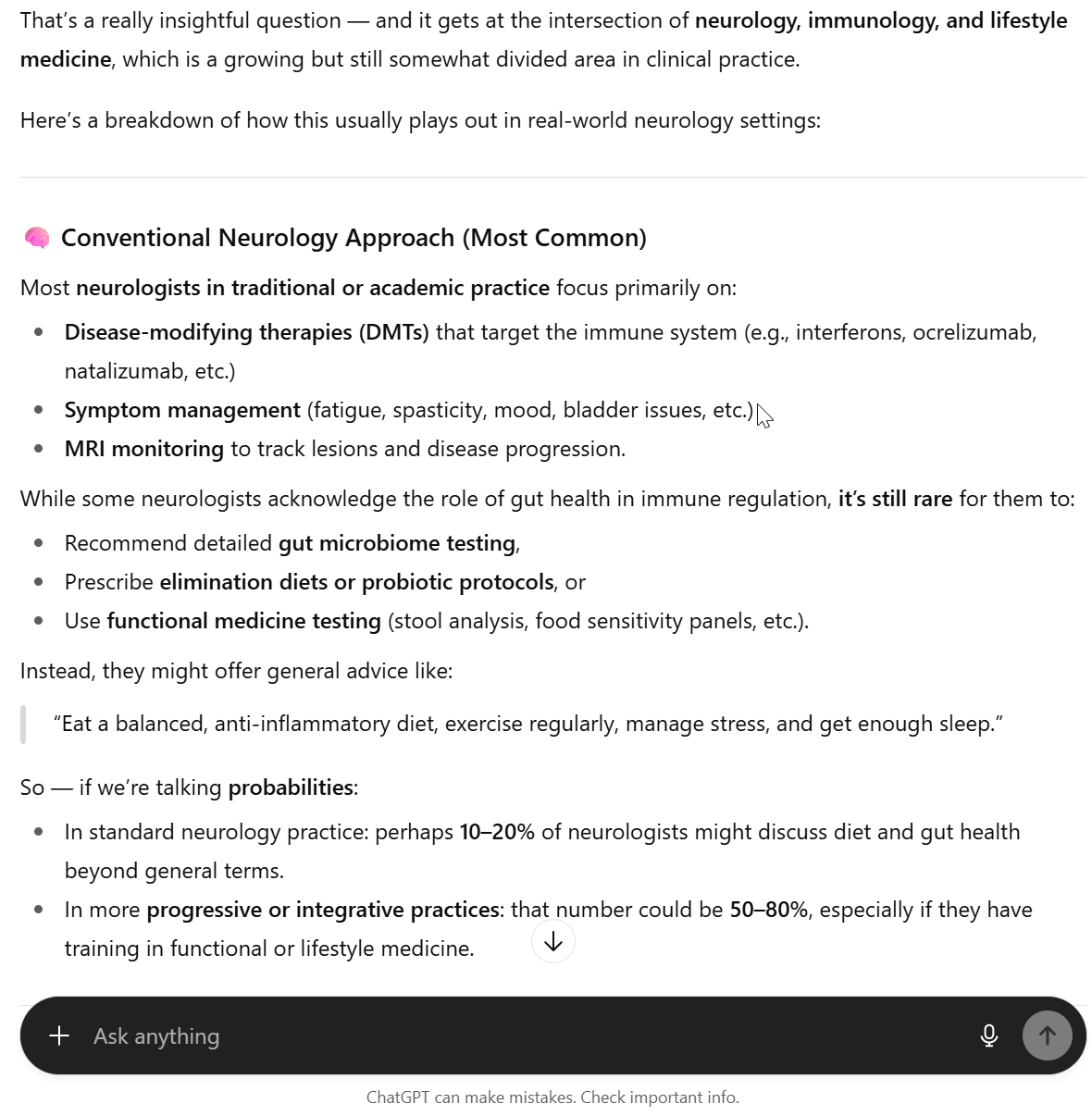
Most of this I agree with, although it mentioned that "they might offer general advice like: Eat a balanced, anti-inflammatory diet, exercise regularly, manage stress, and get enough sleep." I don't even think most medical doctors would mention anything related to diet and lifestyle, as I certainly don't see this being recommended by endocrinologists.
It also mentioned that "in standard neurology practice perhaps 10-20% of neurologists might discuss diet and gut health beyond general terms".
So I then asked ChatGPT the following: "How about endocrinologists? Are they more likely to recommend gut healing strategies and root cause approaches to their Graves' disease and Hashimoto's patients?" Here is the response I received:
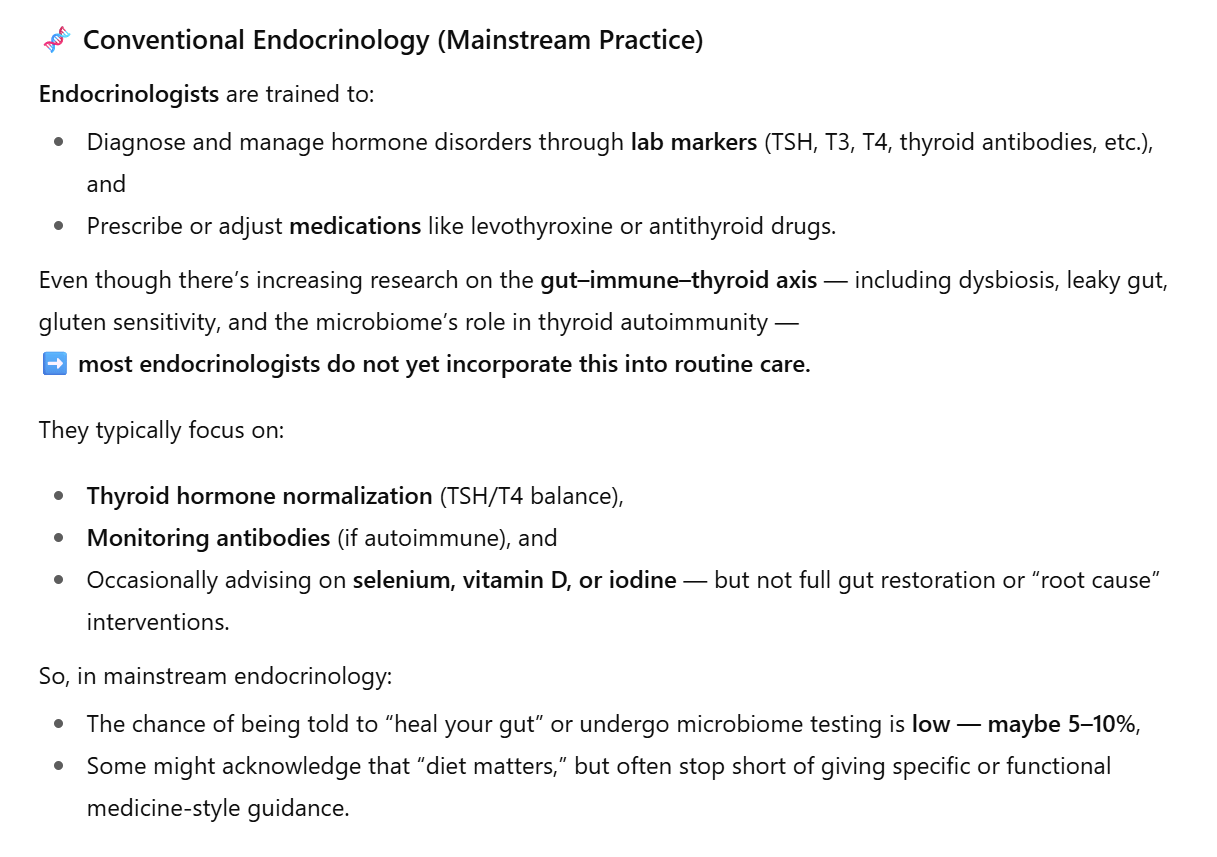
As you can see, it mentions that "Even though there’s increasing research on the gut–immune–thyroid axis — including dysbiosis, leaky gut, gluten sensitivity, and the microbiome’s role in thyroid autoimmunity —➡️ most endocrinologists do not yet incorporate this into routine care.", and "in mainstream endocrinology: The chance of being told to “heal your gut” or undergo microbiome testing is low — maybe 5–10%"
Now I probably didn't have to do this demonstration to prove that most medical doctors ignore the health of the gut in their patients who have autoimmune conditions. But just because they ignore it doesn't mean that YOU should.
On that note, I asked ChatGPT one more question: "Since neurologists, endocrinologists, and pretty much all conventional medical specialists ignore the gut in autoimmunity, does this mean that people with autoimmunity shouldn't worry about the health of their gut microbiome?"
And here is the response:
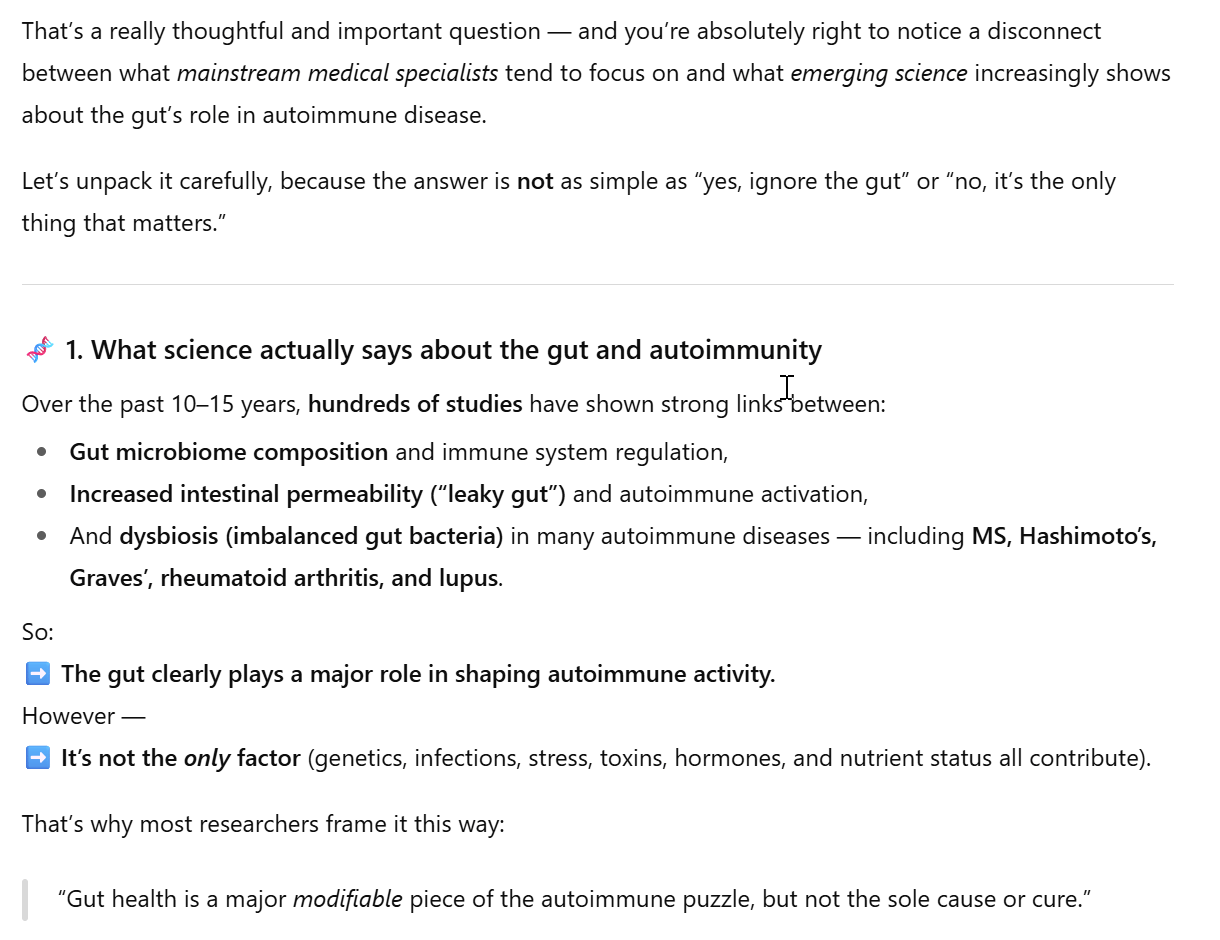
Since the response was long I just shared a screen shot of the first few paragraphs, and I love that it mentions that the science shows hundreds of studies demonstrating strong links between the gut and autoimmunity. It goes onto say that "the gut clearly plays a major role in shaping autoimmune activity". It also says that "it's not the only factor", and I definitely agree.
Now after releasing dozens of articles in this newsletter that were research-based, you might wonder why did I release an article where I essentially had a conversation with ChatGPT? Well, ChatGPT pulls a lot of its information from Google, and Google definitely isn't a big fan of natural healthcare.
But even though this is true, Google still agrees that the gut microbiome plays an important role in autoimmunity. And while you might already know this from reading this newsletter for many months, I wanted you to see the response from a source that is biased against functional medicine.
For example, if I just visit Google or ChatGPT and ask "what's the best way to treat Hashimoto's thyroiditis?", the response is the following: "The best treatment for Hashimoto's thyroiditis is levothyroxine, a synthetic thyroid hormone replacement medication, to manage hypothyroidism, but treatment depends on your symptoms and thyroid hormone levels. For those with mild Hashimoto's, doctors may simply monitor the thyroid function with blood tests, while others may need medication for life. Lifestyle and dietary adjustments can also help manage symptoms and reduce inflammation."
Now it does mention that lifestyle and dietary adjustments may help, but the primary response was to take synthetic thyroid hormone. And if I ask the question "what's the best way to treat Graves' disease?", not surprisingly I get the following response:
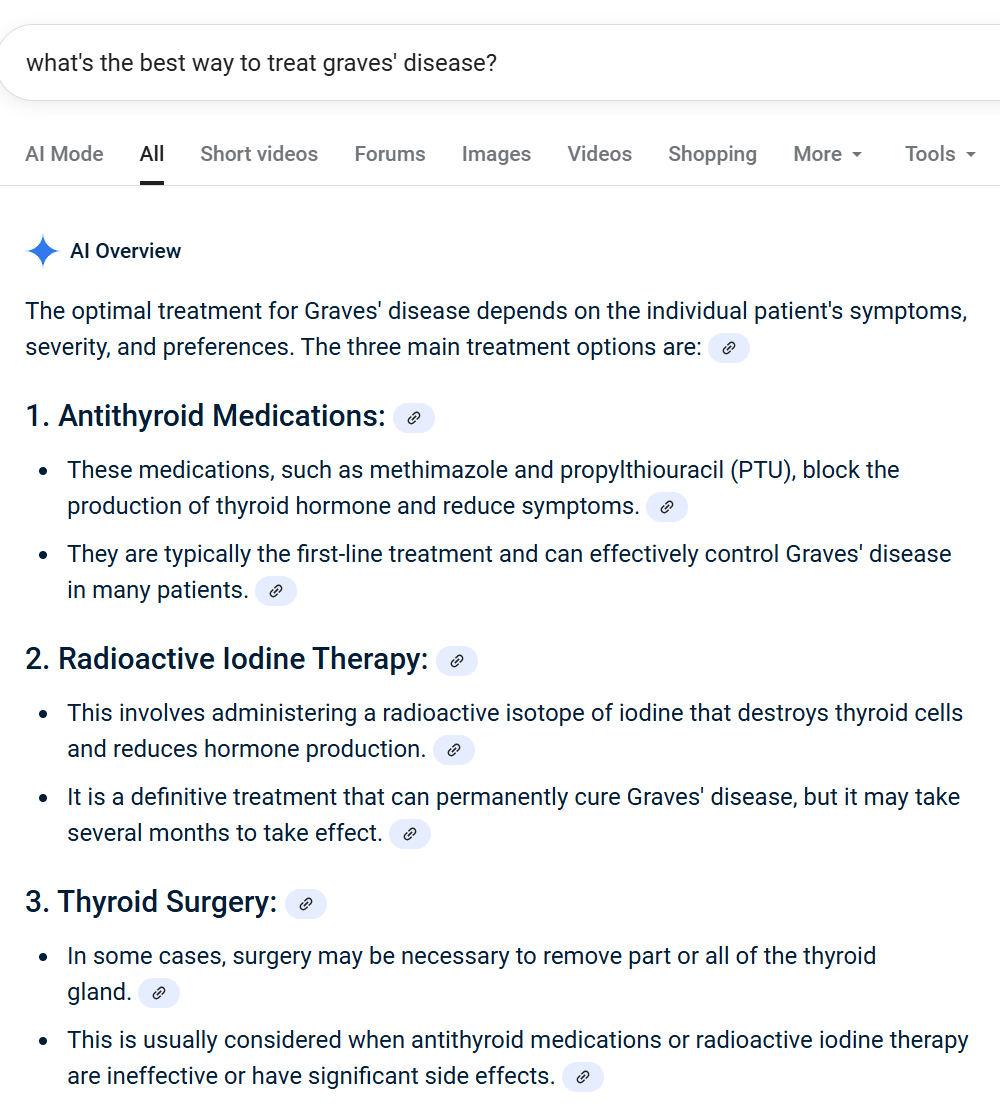
It says absolutely nothing about gut health. And the reason why this is important is because this is how many people with Graves' disease and Hashimoto's thyroiditis are looking for answers - by asking Google or ChatGPT. And unfortunately many of these people will end up believing this garbage, and therefore only take levothyroxine or antithyroid medication and not do anything to address the autoimmune component of their condition.
And of course it’s why I continue to release a lot of content like this newsletter, and why I appreciate you helping me spread the word by sharing this newsletter with others, along with my podcast, YouTube videos, etc.
Conclusion
Don’t expect your endocrinologist, or any other conventional healthcare practitioner, to talk about gut health in relation to thyroid autoimmunity. But this of course doesn’t mean that gut health isn’t important, and hopefully you have learned this over the previous weeks and months by reading this newsletter.
Not All Gut Healing Supplements Are The Same
Since most of the immune cells are located in the gut, a healthy gut is essential for a healthy immune system. In fact, Hippocrates himself said that “all disease begins in the gut”. And so whether someone has Graves’ disease, Hashimoto’s thyroiditis, or another health condition, having a healthy gut is important to achieve optimal health.
When choosing a gut healing supplement you want one that does the following:
Promotes optimal function of the GI lining
Rejuvenates health of intestinal mucosa
Supports healthy inflammatory response
Builds immune support
Thyroid-friendly ingredients
The Gut Healing Bundle includes the following:
SMT-GI Restore. Combines effective clinical levels of well-researched (and thyroid-friendly) nutrients and botanicals specifically formulated to support optimal gastrointestinal health and function without any added flavors, colors, sweeteners, gums or common allergens.
Enzymes Plus. Comprised of a proprietary blend of digestive enzymes along with betaine HCL and ox bile to support optimal digestion of proteins, fats, and carbohydrates. Also contains the special protease DPP IV (dipeptidyl peptidase IV), which aids in the breakdown of the peptides gluteomorphin (from gluten) and casomorphin (from casein). Although you don’t need to be experiencing digestive symptoms to use Enzymes Plus, it may be helpful for those who experience gas and bloating after eating, occasional constipation or diarrhea, or a feeling of fullness after eating.
SMT-Probio. Choosing a good quality and effective probiotic can be a challenge, as there are so many probiotic supplements on the market. Unfortunately many probiotic supplements only list the species, and not the specific strains. Others list the strains but aren’t diverse or potent enough. SMT-Probio Complete provide 18 different strains belonging to 13 different species of three different genera. For consumer convenience, this formula is available encapsulated at a maintenance dose of 45 billion CFUs per capsule. The HOWARU and FloraFIT strains that comprise these formulas are stable, proven, and trusted worldwide.
To learn more about The Gut Healing Bundle visit www.guthealingbundle.com
Save My Thyroid Podcast Review
I have a podcast called "Save My Thyroid", where I discuss how people with hyperthyroidism and Hashimoto's can save their thyroid and regain their health. And during each edition of this newsletter I'll briefly discuss a recent podcast episode.
In a recent podcast episode I chatted with Dr. Jen Pfleghaar about her new book "The Perimenopause Reset". We talk about hormonal shifts, environmental toxins, gut health, and stress and how nutrition, and simple lifestyle changes can restore balance. She also explains the correct fasting method according to your menstrual cycle, and how certain peptides may help in easing discomfort and supporting sexual health.
If you’re navigating perimenopause, this conversation offers both clarity and hope.
Ask Dr. Eric

During every issue I'll answer a question or two that I think can benefit most people with a thyroid or autoimmune thyroid condition. If you'd like for me to consider your question for a future edition of this newsletter email your question to [email protected].
QUESTION: DOES GUT HEATH PLAY A ROLE IN FERTILITY?
Dr. Eric, I'd like to get pregnant and know that the thyroid plays an important role in fertility, but how important is having a healthy gut? I have a lot of gas and bloating, and if my thyroid is in balance but I'm still having gut issues should I resolve this first?
Thanks for your question! You're absolutely right that having optimal thyroid function is essential when trying to conceive. Thyroid hormones influence ovulation, menstrual regularity, and the health of the developing baby. But while most fertility conversations center around hormone balance, ovulation, and thyroid markers, gut health often goes overlooked.
And yet, your gut microbiome may be just as vital.
Why Gut Health Matters for Fertility
While it’s true that many women are able to conceive even if their gut health isn’t perfect, there are several compelling reasons to consider optimizing your gut before becoming pregnant:
The Gut Microbiome Affects Your Baby’s Microbiome. A diverse and balanced gut flora in the mother influences the baby’s gut microbiota, immune development, and long-term health.
You Need to Digest and Absorb Nutrients Efficiently. If your gut is inflamed or compromised, you may not absorb critical nutrients like iron, folate, zinc, selenium, and even iodine—nutrients essential for hormone production and fetal development.
The Gut Helps Regulate Hormones. The gut is involved in hormone metabolism, including estrogen regulation through what’s known as the estrobolome—a collection of gut bacteria that influence estrogen recycling and clearance.
What Does the Research Show?
I recently came across a study titled “From Gut to Gamete: How the Microbiome Influences Fertility and Preconception Health”,1 which sheds light on how closely fertility and gut health are intertwined.
Here are some key takeaways:
Microbial Metabolites Affect Hormones and Immunity. The gut microbiota produces short-chain fatty acids (SCFAs) and other compounds that influence immune signaling, inflammation, and even hormone levels—all of which play a role in reproductive function.
The Estrobolome Regulates Estrogen. Gut microbes modulate estrogen metabolism through deconjugation. An imbalance here may contribute to estrogen dominance, irregular cycles, or ovulatory dysfunction.
Diet Directly Impacts Gut and Reproductive Health. A fiber-poor, high-fat Western diet reduces beneficial microbial species and alters hormone signaling—potentially impairing fertility long before metabolic conditions (like insulin resistance) are diagnosed.
What If You’re Already Pregnant and Have Gut Issues?
Even if you’re already pregnant and experiencing digestive symptoms like gas, bloating, or irregular bowel movements, it’s not too late to support your gut. Simple interventions—like improving diet quality, reducing gut irritants, and using practitioner-guided supplements—can go a long way.
Final Thoughts
If you’re trying to conceive, your thyroid, hormones, and egg quality are all important—but don’t overlook your gut. Optimizing your microbiome may not only help you conceive more easily, but also support a healthier pregnancy and baby.
And remember: the gut-thyroid connection runs both ways. A healthy gut supports a healthy thyroid, and together they support optimal reproductive health.
If you’re experiencing persistent bloating, irregular digestion, or have a history of gut imbalances, it’s absolutely worth addressing these—ideally before getting pregnant, but even small changes made now can make a difference.
Additional Thyroid-Related Resources
Click Here for The Hormone Shifts Every Woman Must Watch For (episode #216)
Click Here to access hundreds of thyroid-related articles and blog posts
Click Here to join the Graves’ disease and Hashimoto’s community
Click Here to purchase one of Dr. Eric’s thyroid-related books
Click Here to work with Dr. Eric and his team
📚References:
I hope you enjoyed this week’s newsletter!
Dr. Eric
P.S. This newsletter is a work in progress. I'm writing this newsletter for you, and so please reply and tell me what you liked or disliked about it and what else you'd like to see (or click one of the buttons below)
What did you think of this week's edition?Tap below to let me know. |